While the Nvidia Vera central processor usually isn’t front-page news when Nvidia beats expectations, it should be. When Nvidia reported Q1 sales of US$81.62 billion compared to analysts’ projections of US$78.86 billion and guidance for Q2 sales of US$91 billion (compared to the US$86.84 billion projected by Wall Street), the figures did what Nvidia figures normally do – took center stage.
However, hidden among the remarks made by Nvidia chief executive officer Jensen Huang during his discussion with analysts was one far more significant than yet another beat. According to Huang, the recently unveiled Vera central processors provide the company access to a US$200 billion market that lies completely beyond the company’s existing US$1 trillion forecast of revenues generated by Blackwell and Rubin GPUs over the next three years.
Huang anticipates that the revenue derived from sales of Vera chips will reach US$20 billion this fiscal year alone. “I expect (it) to be the second biggest sales contributor,” said Huang to the audience of analysts.
That’s no backwater. It’s a whole new theater of battle.
Also Read : NVIDIA H200 China Deal Survives the Donald Trump-Xi Jinping Summit—But with an Unexpected Twist
The Vera chip and the inference engine
Nvidia needs a new front because its clients are also developing one. Google, Amazon, and Microsoft, collectively set to invest about $700 billion into AI infrastructure this year, compared to $400 billion estimated in 2025, will also be spending money on custom silicon capable of running AI models. Furthermore, Intel and AMD argue that CPUs offer viable inference performance.
Today, the conversation about chipsets in the industry focuses not on how big a company can train models but how cheaply and fast they can serve them. It is here where Nvidia is the most vulnerable due to its reliance on GPUs for inference. Nvidia is strong at training big models but faces increasing competition in inference from custom chipsets offered by Google through its TPU series, Amazon with its Trainium series, and others.
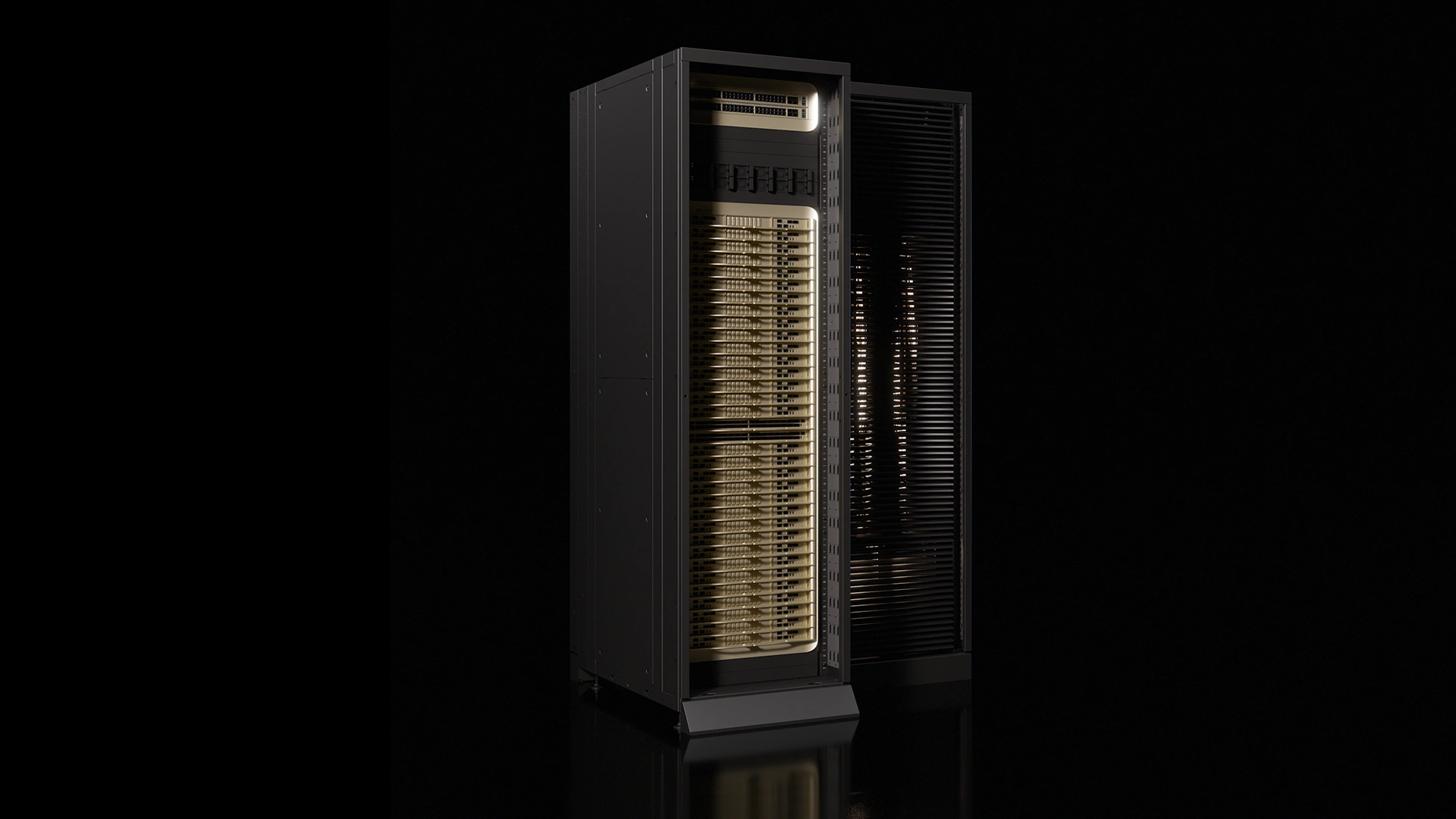
Nvidia’s solution is Vera. A custom CPU that was created in collaboration with Groq, a start-up specialized in inference solutions Nvidia acquired for about $17 billion in 2022, Vera focuses on solving the problem at hand. The entire Vera Rubin ecosystem – consisting of Vera CPU and Rubin GPUs – will be launched this year.
The limitation is already there on the supply side
In an honest appraisal of some issues facing the company, Huang stated, “My view is that we will be supply-constrained all throughout Vera Rubin.” This is a revealing comment from the maker of what the company intends to make as a pillar of future growth. Nvidia has invested quite significantly in trying to avoid disruptions from a lack of supply. According to the company’s disclosures, the supply commitments have been increased to $119 billion from $95.2 billion in Q1. This is indicative of not only a firm belief in the market but a real fear of global shortage of memory chips.
The company also revealed plans of buying back shares worth $80 billion and increased the quarterly dividend payments by 25 cents a share from 1 cent.
Also Read : United States Government Expands AI Suppliers and Reassesses Anthropic’s Role
Investors’ main concern
Even with these positive results, however, Nvidia stock dropped by 1.6% in after-hours trading as the news hit. As one eMarketer analyst put it, “Nvidia has beaten expectations again, but this comes as no surprise since it continues to do so each and every quarter. What remains uncertain is whether or not it will be able to convince investors that the AI investment it has made is durable out to 2027 and beyond, especially as the story shifts focus to inference-based loads and silicon from competitors like Google, Amazon, AMD, and Intel.”
Huang responded with figures of his own, citing a growing segment of cloud customers for which Nvidia is providing solutions specifically related to AI. “They are growing even more quickly than hyperscale capex,” he added.
Image source: Nvidia Newsroom