The plan for the ceremony had been made. The CEOs were part of the guest list. And suddenly, there was no event anymore.
According to The Verge, US President Donald Trump cancelled his AI executive order, which had faced delays many times before, on Thursday, arguing that such an order would put America at a disadvantage against China.
“We’re beating China, we’re beating everybody else. And I’m not doing something where we fall behind.” Trump explained in the Oval Office to the press what led him to make this decision. The thing is, what Trump did not realize is that this executive order was effectively shot down by its own industry leaders.
Pushed out in just one night
As per the information obtained by Semafor, who broke the story, the plans of the White House were stopped following direct consultations between Elon Musk of xAI, Meta chief executive Mark Zuckerberg, and venture capitalist David Sacks, formerly Trump’s czar for artificial intelligence and cryptocurrencies, with the former president sometime during Wednesday night and Thursday morning.
The approach that seems to have won the day, based on US media reports citing their sources, involved appealing to the “accelerationist” camp in the administration, with representatives from the National Economic Council and Vice President’s staff among others.
It wasn’t the type of sweeping regulation, but rather an attempt to create a voluntary process in which AI researchers could interact with the US federal agencies, sharing their new models for review 90 days ahead of their release into the public space. No licensing system required. Not even hold periods. Voluntary.
However, it seems that even that was too much for Trump who said he had decided to postpone the order “because I didn’t like certain aspects of it.” The exact aspects he objected to remained unspecified. What did concern him, apparently, is the possibility for such an initiative “to be a blocker.”
Also Read : RingCentral Expands AI Receptionist with Shopify, Calendly, and WhatsApp Integrations
A consequence vacuum
The US does not have any comprehensive legislation governing the use of AI technologies. The governance framework currently in place has been cobbled together by executive orders, regulatory guidelines, and voluntary measures. Last week, the federal Centre for AI Standards and Innovation unveiled an evaluation initiative involving Google DeepMind, Microsoft, and xAI. This is in spite of the fact that the signing did not take place last Thursday.
More generally, there has been regulatory drift regarding the issue. As far back as March 2018, the Trump administration came up with a legislative framework for AI in which it suggested pre-empting state-level laws governing AI, since such laws would impose “undue burdens” and leave us with “50 discordant standards.”
It becomes evident that the difference between both countries becomes more and more obvious. As reported by the State Council of Beijing, an official plan for 2026 was published in May regarding legislation of AI. For the third year in a row, AI legislation is included in the list of reviewed issues of the National People’s Congress.
In April, a decree has been published by the Beijing authorities, according to which all AI companies will be obliged to form their own ethics committee. China writes the rules. Washington cancels the ceremonies.
US Artificial Intelligence Policy
This Thursday’s episode made explicit what has been implicit for months now: in the present-day government, the ability to issue a veto against AI regulation lies with an inner circle of industry leaders who are in contact with the President.
For instance, Musk’s xAI, which competes directly with OpenAI and Anthropic, has a vested interest in keeping the playing field open. Similarly, Meta, owned by Zuckerberg, has positioned itself as a staunch advocate of open-source artificial intelligence technology. While Sacks has officially withdrawn from his advisory position in the White House since March, he still wields considerable sway to influence executive decision-making.
On a separate note, Semafor has reported that OpenAI has the backing of the White House for another attempt to pursue AI regulations at the state level. This is rather intriguing because Trump’s executive order earlier on had warned states against making any laws regarding AI technology that went against the views of the administration. This indicates that the issue of policy inconsistency is more complex than just a delayed signing process.
Also Read : NVIDIA’s Vera Chip Is a $200 Billion Bet Jensen Huang Wants the World to Notice
The China Frame is very functional, however, on both sides
Indeed, Trump’s excuse for stepping back, ensuring that the US retains its lead ahead of China, has been the guiding principle behind every single AI-related policy choice made ever since he came into power again, from H200 licences to the Stargate infrastructure program. And this has been the same logic that China is keeping an eye on as well.
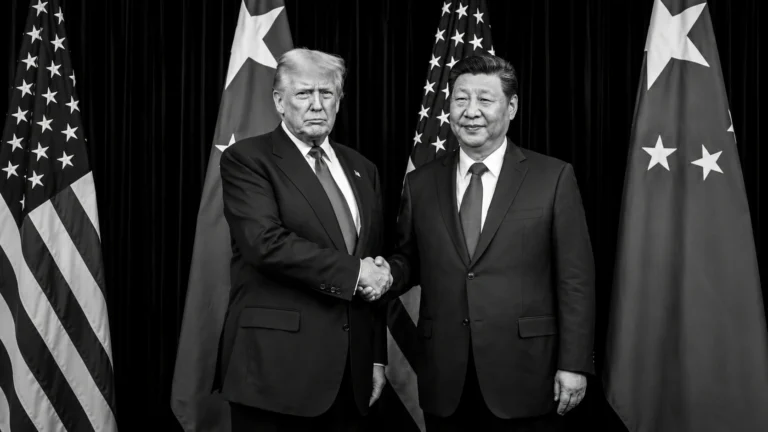
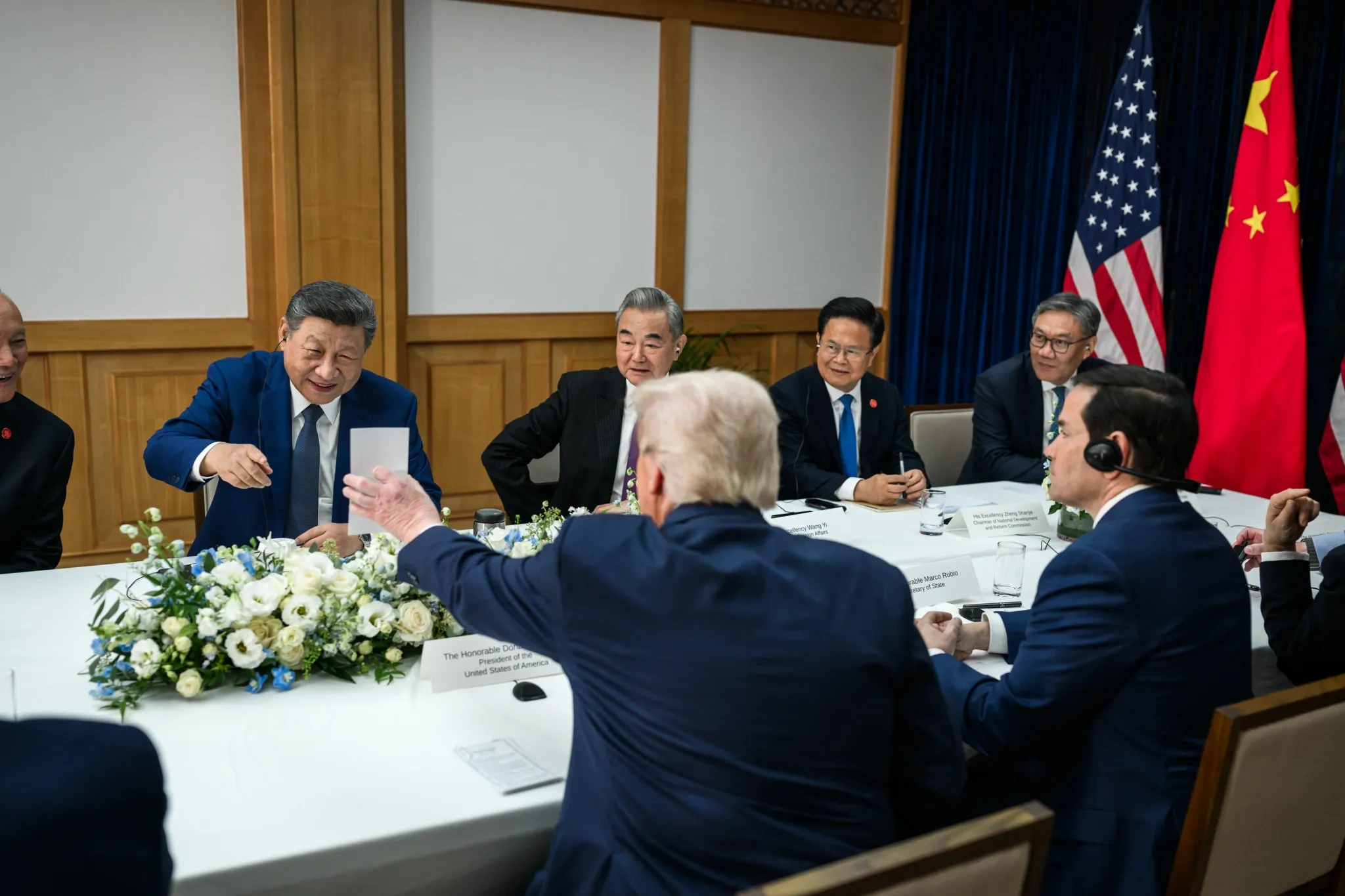
The recent summit between President Trump and Chinese leader Xi Jinping held earlier this month in Beijing saw the two agree to open intergovernmental talks on artificial intelligence, said the Chinese Foreign Ministry. China would have taken notice that the discussion within the US administration regarding the regulation of the industry had come to a conclusion that wasn’t reached by politicians but by the beneficiaries themselves.
According to a report by the South China Morning Post, Lizzi C. Lee, Asia Society Policy Institute’s Centre for China Analysis fellow, pointed out that the problem faced by the US and China was the same one in terms of regulating frontier AI models as they grew more and more autonomous and relevant for cyber-security purposes.
I believe there is another competition on governing and ensuring safety which is possibly even more crucial: Not on how advanced your model is, but on how you will be able to govern it and keep innovation alive,” she remarked.
According to the same report, the following point was made by Kyle Chan of Brookings Institution more clearly: “AI safety and regulation needn’t be at odds with innovation.”
Photo by White House