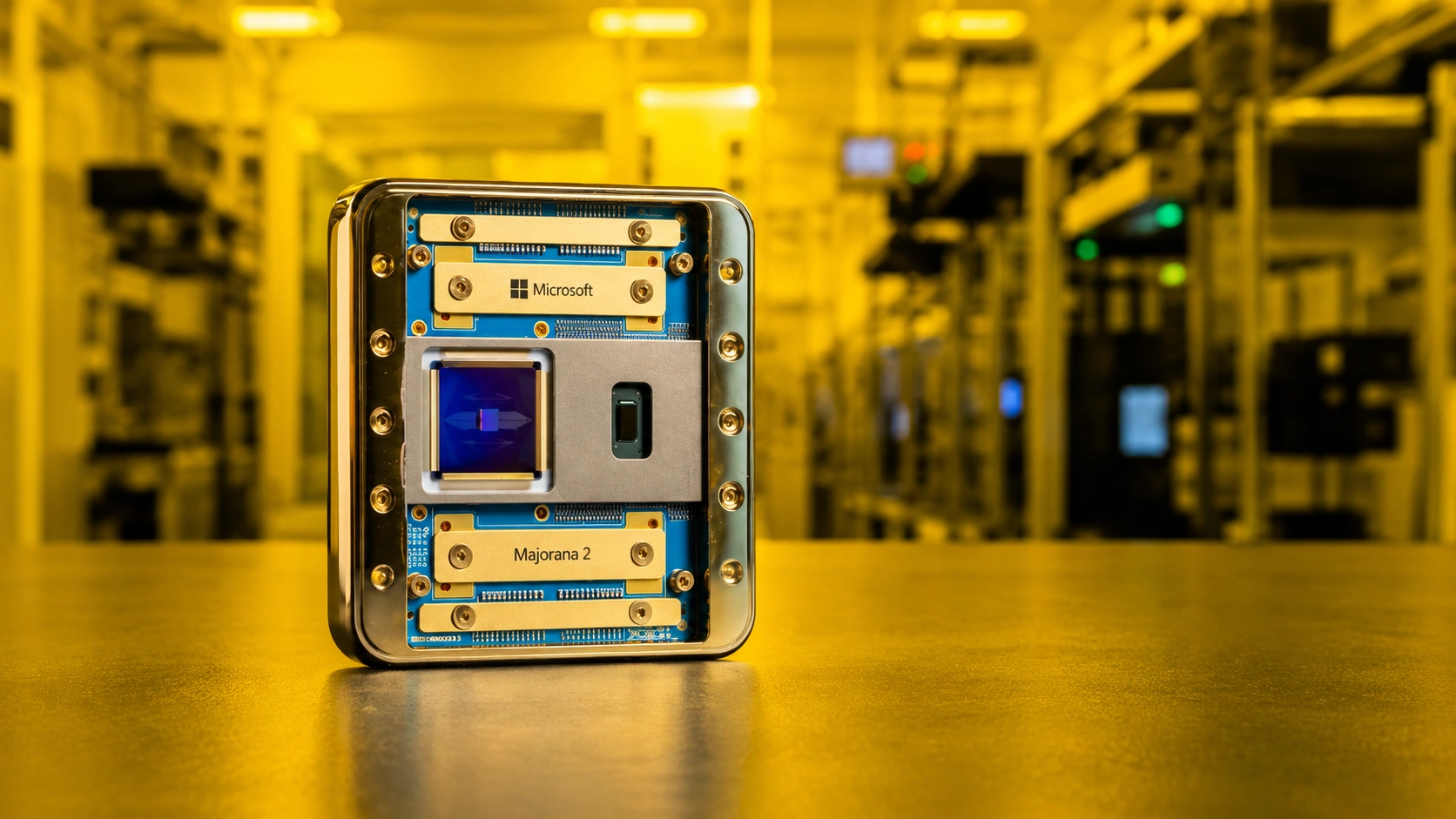
Microsoft just released the Majorana 2 quantum chip, and it’s impressive. It boasts a thousand times more reliable qubits compared to its predecessors, plus a mean qubit lifespan of 20 seconds – the norm is mere microseconds. This breakthrough puts a commercially scalable quantum computer within reach by 2029.
In simpler terms, current quantum chips usually keep their data for a split second at most. The Majorana 2? Up to a whole minute – pretty insane right?
Developing this wasn’t easy, but Microsoft had help from their new AI tool called Microsoft Discovery, designed for research and development. Not only did the quantum chip advance tech, but it also demonstrates how well their AI platform works.
Also Read : OpenAI Opens Singapore AI Lab as Infocomm Media Development Authority Updates AI Framework
So, this release isn’t just about amazing stats; it’s showing off an AI system that helped get those results. Microsoft timed both announcements to show that their big idea in AI successfully solved a major problem in quantum computing.
Microsoft’s Discovery agentic AI did some stuff, but the details got cut out. Seems like there was more info before about its doings. So that’s a bummer, but hey, maybe we can find someone who knows what went on.
Everyone thinks the story is about AI designing the chip, but that’s not quite right. The truth is way more specific and cool. See, the move from aluminum to lead, which Microsoft credits for most of the improved reliability, came from regular old-fashioned materials research – not from some AI suggestion.
Now, here’s what the AI really did. It streamlined processes, sped up automated measurements that used to stretch on for weeks, and broke down a wealth of research data that had been tucked away for nearly twenty years. It also uncovered connections that any one person couldn’t possibly remember or analyze.
Zulfi Alam, Microsoft’s corporate vice president for quantum, explains it well. He says AI helps by sifting through all this info, spotting links and patterns that a lone researcher could never identify. With tons of simulations, researchers get a good guess on what might work. This means no more wasted time; you probably only need one try to figure it out now.
The team made real progress in automating qubit measurement, which used to take weeks when done manually. Earlier attempts with basic machine learning failed, but this time they’re using Microsoft Discovery to build three-dimensional maps of qubit conditions. They now use agentic AI to automate these processes, and it’s a game changer. The AI can manage parallel voltage adjustments across hundreds of parameters – something humans can’t do because we think linearly. Alam said the agent’s ability to handle all those simultaneous tweaks is way beyond what people can manage on their own.
Microsoft now offers a platform to businesses combining specialized AI agents for research, a Discovery Engine for workflow and reasoning tasks, and top-notch security. An early preview of their free app is also available; you can use it locally with a GitHub Copilot account.
Also Read : Display Ads Are Moving into Google’s AI-Powered Demand Gen
Moreover, Microsoft moved up their quantum computing goals from 2033 to 2029 thanks to Majorana 2’s advancements. This seems like progress, though past quantum tech roadmaps have often been too optimistic. The claim of a 1,000x improvement applies just to their qubits compared to Majorana 1. It doesn’t measure against IBM or Google’s methods, which differ significantly.